
The Future of Integrated Digital Marketing Systems
Modern businesses operate in an increasingly complex digital environment where branding, advertising, content creation, automation, analytics, and customer engagement systems all need to function together in a coordinated way to produce consistent and scalable growth. In reality, however, many organizations still rely on disconnected marketing tools that operate independently from one another, which often leads to fragmented data, inconsistent messaging, and a lack of clear visibility into overall performance. As a result, even well executed campaigns can underperform simply because the underlying systems are not properly aligned or integrated.
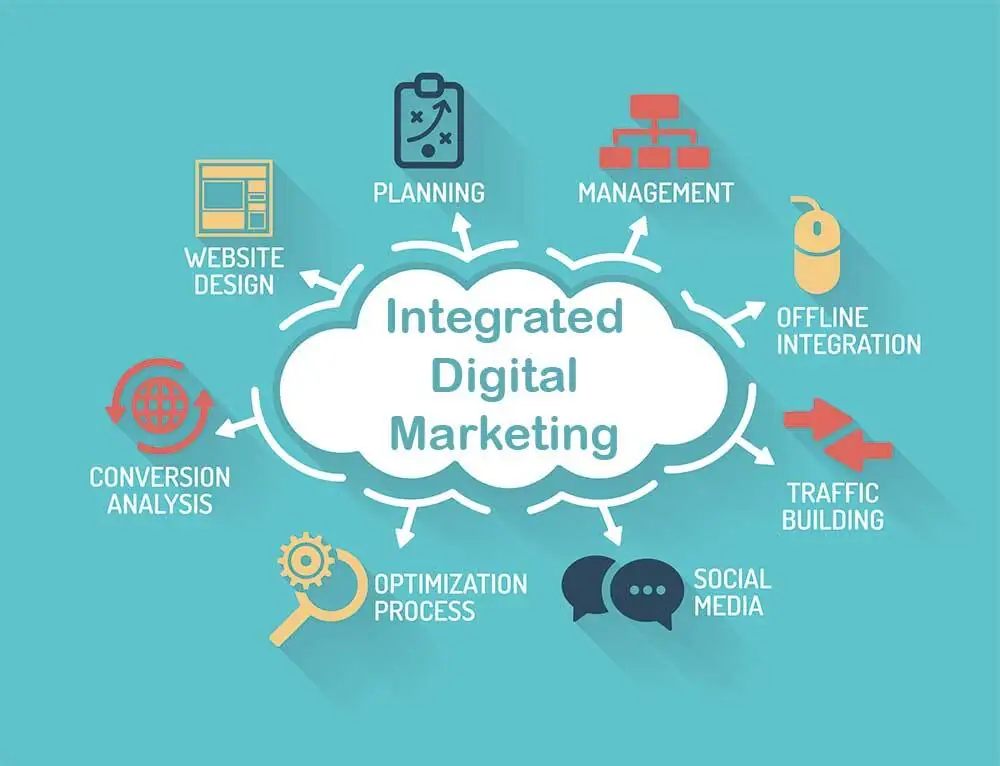
Integrated digital marketing systems have therefore become a critical requirement for businesses that want to build a strong online presence, improve conversion rates, and scale operations efficiently over time. By connecting marketing channels, data infrastructure, automation workflows, and performance tracking systems into one unified ecosystem, businesses gain the ability to see the full picture of their marketing efforts rather than isolated pieces of information. This connected structure allows organizations to operate with greater clarity, make more informed decisions, and build predictable growth models based on real performance data.
The Problem With Fragmented Marketing Systems
Many businesses today still rely on separate tools to manage SEO, social media, paid advertising, CRM systems, email campaigns, and analytics platforms. While each tool may be effective on its own, the absence of proper integration between them creates significant gaps in data flow, communication, and overall performance tracking across the marketing ecosystem. This disconnect makes it difficult to understand how different channels influence each other or contribute collectively to business outcomes.
Over time, this fragmentation leads to inconsistent reporting, duplicated efforts across teams, missed growth opportunities, and inefficient decision-making processes. Marketing teams often struggle to build a complete understanding of the customer journey because relevant data is scattered across multiple platforms that do not communicate effectively with one another. This lack of unified visibility reduces the effectiveness of strategy development and limits the organization’s ability to optimize performance at a system level.
What Integrated Marketing Systems Achieve
Integrated marketing systems bring branding, advertising, content, automation, and analytics together into a single structured framework that allows businesses to operate with complete visibility across all marketing activities. Instead of managing separate channels in isolation, organizations can track customer behavior across every touchpoint and understand how each interaction contributes to engagement, conversions, and long-term customer value. This creates a far more accurate and actionable understanding of marketing performance.
With this level of integration, businesses can automate repetitive marketing tasks, improve campaign execution speed, and optimize performance using real-time data insights rather than delayed reports or fragmented analysis. Every marketing action becomes measurable and connected to broader business objectives, which leads to more precise targeting, higher conversion rates, and significantly improved efficiency in marketing spend.

Power of Marketing Automation
Marketing automation plays a key role in integrated systems by streamlining repetitive tasks such as email campaigns, lead nurturing, customer segmentation, reporting, and follow-ups. Automated workflows ensure consistent communication with customers while reducing manual workload for marketing teams.
Automation also improves scalability by allowing businesses to handle larger audiences without increasing operational complexity. As customer interactions grow, automated systems maintain consistency, personalization, and engagement across all channels.
Data-Driven Decision Making
One of the most powerful advantages of integrated marketing systems is access to unified, real-time data that allows businesses to understand performance across all marketing channels in a single connected environment. Instead of relying on fragmented reports pulled from different tools, organizations can finally see how every campaign, channel, and customer interaction contributes to overall business outcomes in a clear and structured way. This creates a level of visibility that makes marketing performance easier to interpret and act upon without confusion or delays. With this unified view, businesses are no longer forced to depend on assumptions or delayed reporting cycles when evaluating their strategies. They can actively monitor campaign performance across paid advertising, organic search, email marketing, and social media while understanding how each channel influences engagement and conversion behavior. This helps teams move away from reactive decision-making and toward a more proactive and controlled approach where adjustments are based on live performance signals. Over time, this improves both the speed and quality of decision-making across the organization. Marketing teams can respond quickly to changes in customer behavior, identify underperforming campaigns earlier, and optimize strategies continuously instead of waiting for end-of-month analysis. The result is a more intelligent marketing system where every decision is backed by real-time insights rather than fragmented or outdated information.
This level of visibility also strengthens how businesses understand the complete customer journey from initial awareness to final conversion. Instead of analyzing isolated touchpoints, organizations can connect interactions across multiple channels and build a full picture of how users engage with their brand over time. This deeper understanding makes it easier to identify what drives conversions and where potential drop-offs or friction points exist in the funnel. With this clarity, marketing teams can refine their strategies continuously rather than treating optimization as a one-time task. Campaigns become more adaptive, allowing businesses to improve messaging, targeting, and timing based on actual behavioral data instead of assumptions. This creates a feedback-driven system where performance is constantly improving through ongoing analysis and refinement.
Scalability Through System Integration
As businesses grow, marketing operations naturally become more complex due to the increasing number of channels, tools, and customer touchpoints that need to be managed simultaneously. Integrated systems provide a scalable foundation that allows organizations to expand their marketing efforts without losing control, efficiency, or consistency across their operations. Instead of rebuilding systems every time growth occurs, businesses can extend their existing infrastructure in a structured and manageable way. This makes it easier to introduce new tools, platforms, and technologies into the marketing ecosystem without disrupting existing workflows or data flow. Whether it is automation platforms, analytics systems, or new advertising channels, integration ensures that everything connects smoothly and operates as part of a unified structure. This reduces operational friction and prevents the chaos that often comes with rapid expansion. As a result, teams can focus more on execution and strategy rather than dealing with system breakdowns or disconnected processes. Marketing operations remain stable even as complexity increases, allowing businesses to scale confidently while maintaining performance quality and operational clarity across all departments.
New channels, tools, and strategies can be added seamlessly without disrupting existing workflows or customer experiences. This flexibility allows businesses to adopt modern technologies such as AI-driven marketing systems and advanced automation platforms without needing to completely restructure their existing setup. Instead of replacing systems, they are enhanced and expanded over time. This approach also improves long-term efficiency by reducing technical bottlenecks and minimizing dependency on manual coordination between disconnected platforms. Marketing teams can manage larger and more complex operations while maintaining consistency in execution and reporting. Over time, this creates a more resilient and future-ready marketing infrastructure capable of adapting to evolving business needs.
The Future of Digital Marketing
The future of digital marketing is rapidly shifting toward fully integrated, AI-powered ecosystems that combine automation, personalization, and predictive analytics into a single intelligent framework. Businesses are moving away from traditional fragmented tools and adopting unified systems where all marketing activities are connected and continuously optimized through data-driven intelligence. Artificial intelligence is playing a major role in this transformation by enabling real-time campaign optimization, predictive audience targeting, and automated content adjustments based on user behavior. This allows businesses to deliver more relevant and personalized experiences at scale while reducing the need for manual intervention in day-to-day marketing operations. As these systems evolve, marketing becomes less about manual execution and more about managing intelligent infrastructure that continuously improves itself based on performance data. This shift creates a major competitive advantage for businesses that adopt these systems early, as they are able to respond faster, optimize more efficiently, and scale more effectively than those relying on traditional methods.
In this new environment, marketing will no longer revolve around managing separate tools or isolated campaigns. Instead, it will focus on orchestrating connected systems that work together to analyze data, execute campaigns, and optimize performance in real time. This creates a more streamlined and efficient approach to growth where decision-making is supported by automation and intelligence at every stage. Over time, this leads to a marketing ecosystem that is self-improving, highly adaptive, and capable of responding to market changes instantly. Businesses that embrace this shift will be better positioned to scale sustainably while maintaining efficiency and consistency across all digital channels.
Conclusion
Integrated digital marketing systems are no longer optional for modern businesses—they are essential for achieving scalability, efficiency, and long-term growth in an increasingly competitive digital landscape. By unifying branding, marketing execution, automation, and analytics into a single connected framework, businesses can eliminate fragmentation and operate with greater clarity and control. This integration allows organizations to make faster decisions, improve campaign performance, and deliver more consistent customer experiences across every digital touchpoint. Instead of managing disconnected systems, teams work within a unified environment where data flows seamlessly and insights are always accessible. As a result, businesses can scale more effectively while maintaining operational stability and strategic alignment. Marketing becomes more predictable, more efficient, and more aligned with long-term business objectives rather than short-term campaign goals.
At AllianceOneMarketing, the focus is on building complete marketing ecosystems that combine strategy, creativity, technology, automation, and analytics into a single unified growth framework. The goal is to help businesses move beyond fragmented marketing operations and toward fully integrated systems that deliver measurable, sustainable, and scalable results. This approach ensures that every part of the marketing process works together cohesively, enabling businesses to grow with confidence while maintaining strong operational control and performance visibility. In the long run, this creates a foundation for continuous digital transformation and long-term business success.
Leave a Reply